Guides
← JournalThe Best Bedside Lamp for a Small Nightstand (When You Have No Room to Spare)
July 26, 2026Lumé Maison
A nightstand is usually about the size of a dinner plate, and it is already holding a phone, a book, a glass of water and a pair of glasses. Then the lamp arrives: a wide shade, a heavy base, and a cord that has to be threaded down behind the bed to an outlet you cannot reach without moving the whole thing. Most bedside lighting fails on furniture logistics long before anyone argues about the light itself.
The fix is not a smaller version of the same lamp. It is a different set of priorities: footprint first, then dimming, then how it is powered.
Footprint matters more than height
The number that decides whether a lamp works on a small nightstand is the diameter of its base and shade, not how tall it is. A lamp with a 12cm base leaves room for everything else; a lamp with a 25cm shade overhangs the edge and knocks your glasses off at 2am. Measure the free space on your nightstand before you look at a single product photo, and treat that measurement as a hard limit.
- 01Under 15cm wide: fits nearly any nightstand alongside a phone and a book.
- 0215-25cm wide: needs a dedicated nightstand with little else on it.
- 03Over 25cm wide: really a console or dresser lamp, not a bedside one.
If it does not dim, it is the wrong lamp
A bedside lamp has two jobs that need very different amounts of light: reading a few chapters, and giving you just enough glow to find the door. A single fixed brightness cannot do both. Either it is too dim to read by, or it is bright enough to undo the wind-down you were going for.
This matters beyond comfort. Bright light in the evening, especially cooler blue-white light, suppresses melatonin and makes it harder to fall asleep. Warm light at low brightness is the friendlier choice for the last hour of the day. We wrote more about that in the science of light and sleep.
Cordless solves the problem cords created
The outlet behind a bed is usually blocked by the bed. A rechargeable lamp sidesteps the whole issue: you charge it over USB every week or two and put it wherever you like, including nightstands with no outlet nearby, a windowsill, or a shelf across the room. It also means you can carry the same light to the bath or the balcony without rewiring your evening.
The trade-off is honest: rechargeable lamps run at lower output than a mains lamp with a big bulb. For bedside use that is usually the point, not the drawback.
Materials decide whether it looks cheap
Small lamps are hard to make look expensive, because there is not much surface to work with. Natural materials do the heavy lifting: a woven cloth shade diffuses light softly and hides the bulb, and a turned wood base adds visual weight so the lamp does not look like a plastic gadget. Moulded plastic in a glossy finish reads cheap at any price, and it reads cheap even when it is switched off, which is most of the day.
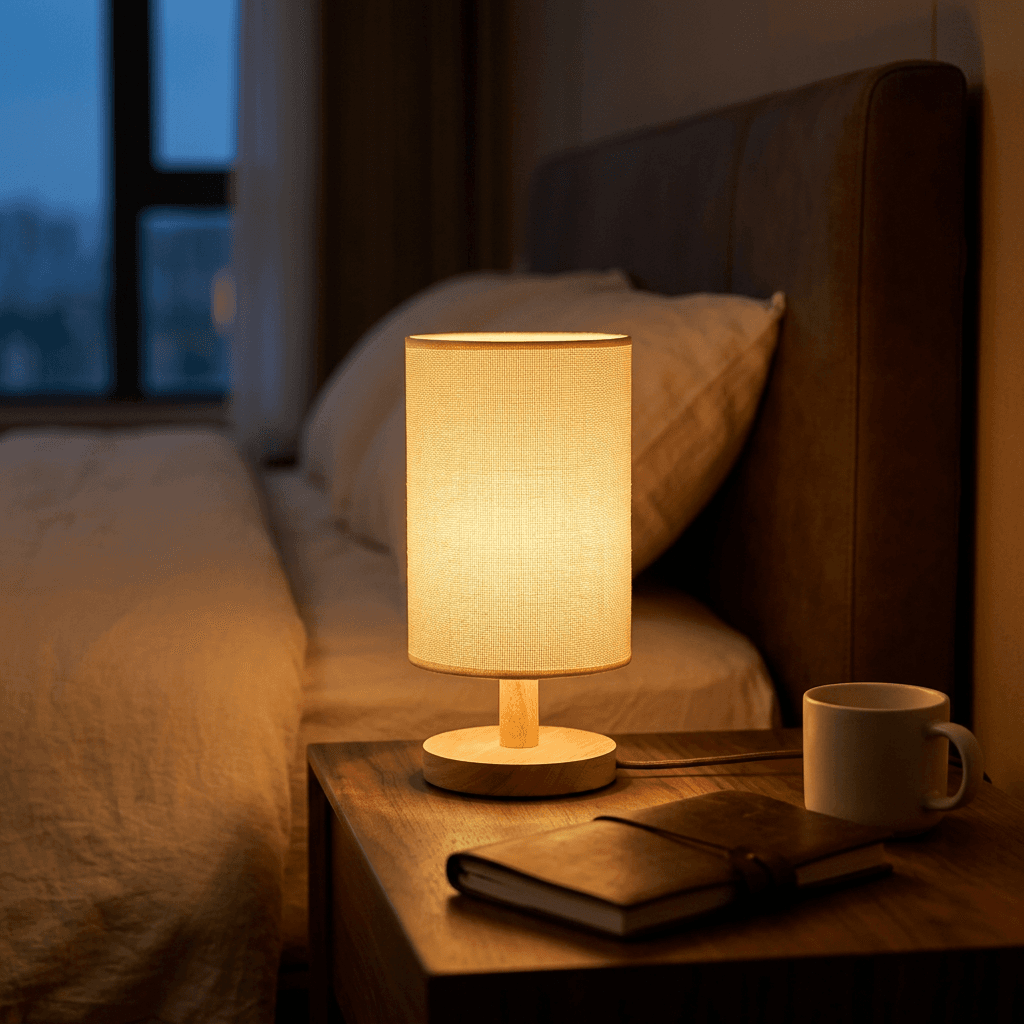
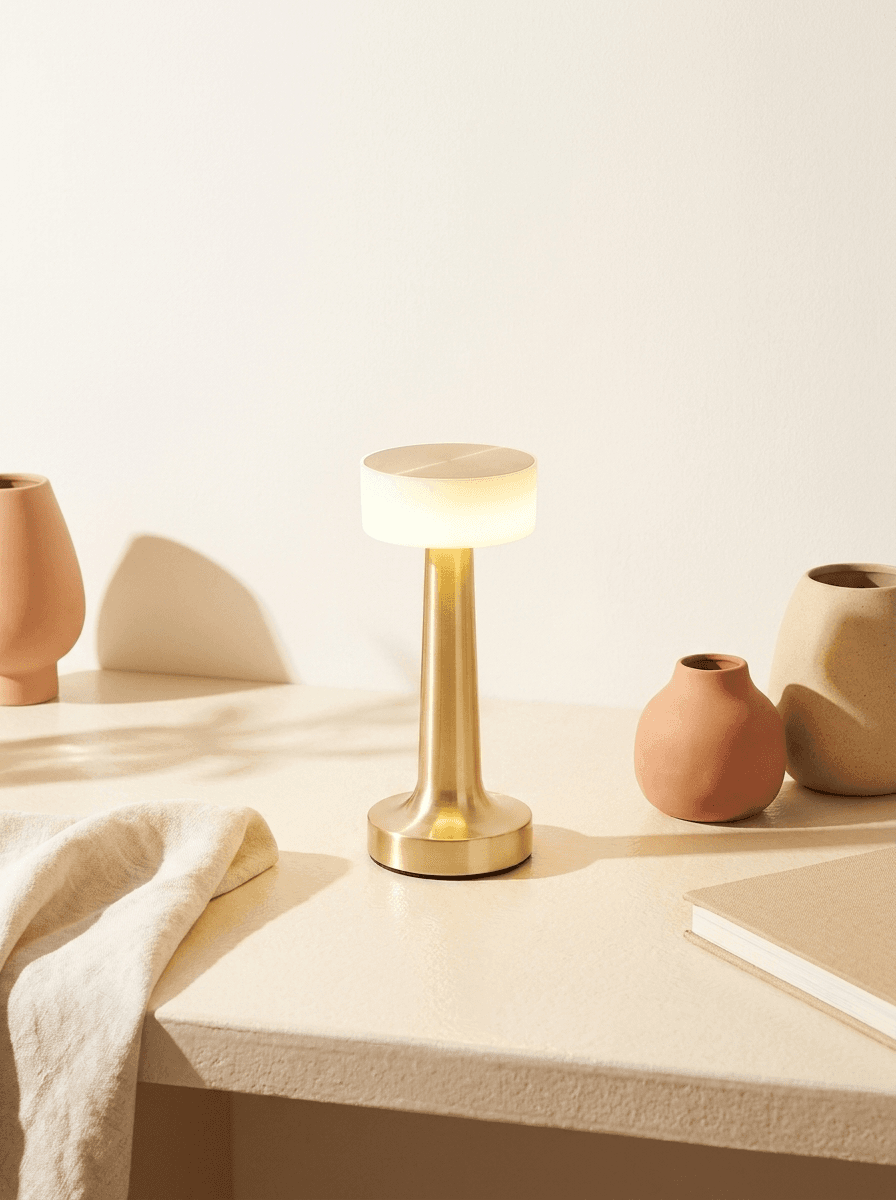
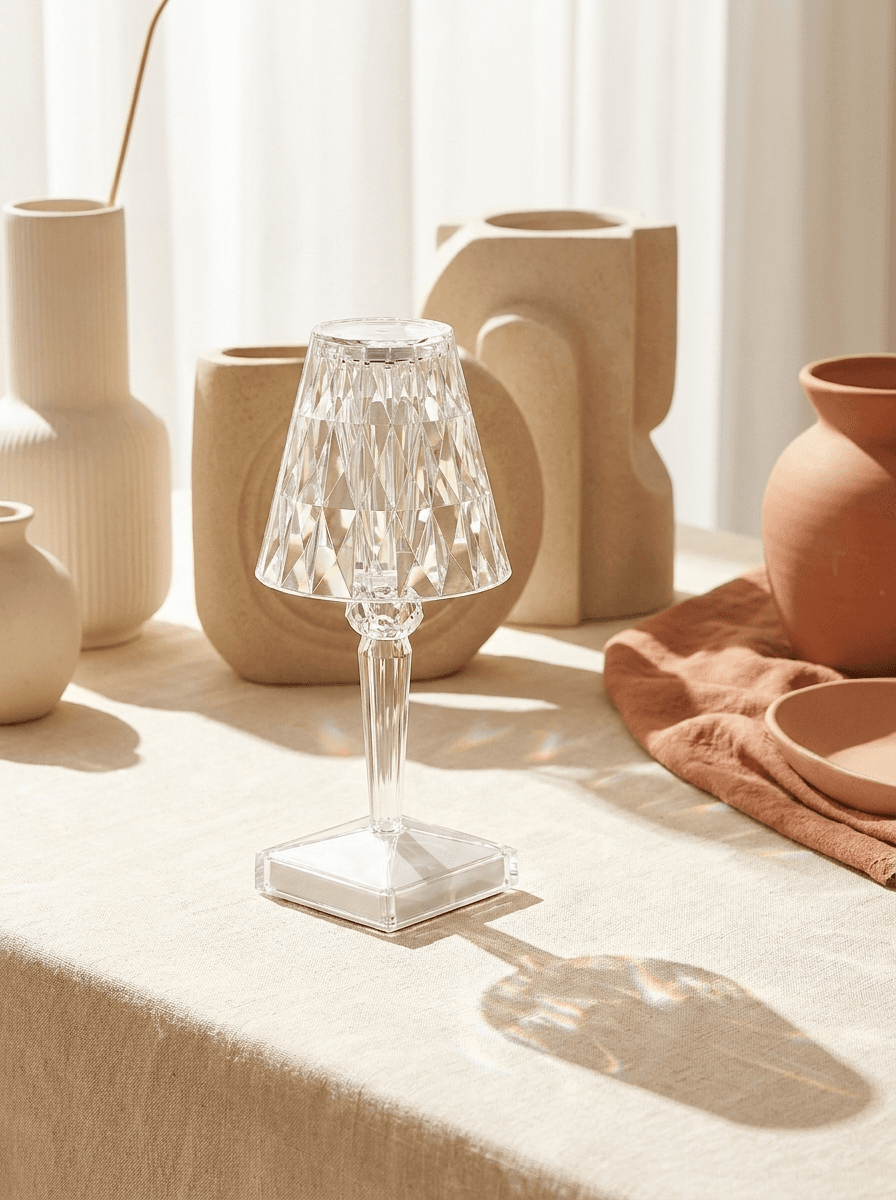
From our collection, Tela is the one built for exactly this problem: a woven linen, jute or wheat shade on a turned oak base, small enough to share a nightstand, cordless and rechargeable so no outlet is needed, with touch dimming and three light tones. Milano is the more compact metal option if you want to carry one light from the bedside to the dinner table, and Facet is the smallest of the three if your nightstand is genuinely tiny.
A short checklist
- 01Measure the free space on the nightstand first, and treat it as a limit.
- 02Insist on dimming, and on a warm setting for the last hour of the day.
- 03Prefer rechargeable if the nearest outlet is behind the bed.
- 04Choose fabric, wood, glass or metal over glossy plastic.
- 05Check that it still looks good switched off, because that is how you will mostly see it.
Ready to kill the big light?
Shop the collectionFree worldwide shipping · 60-day returns · secure checkout